


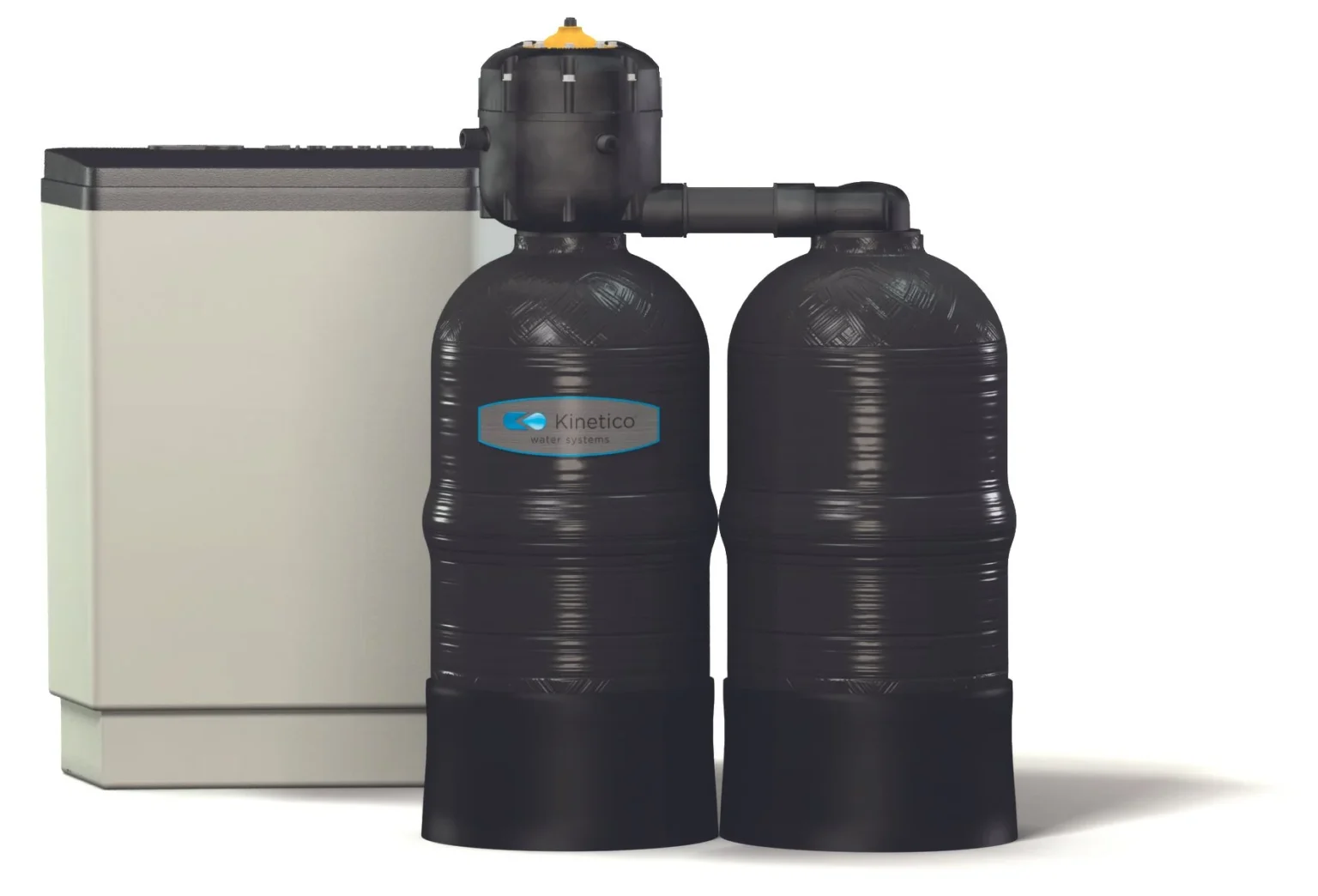
Water softeners use ion exchange or other filtration methods to remove calcium and magnesium from the water, reducing scale buildup in pipes and fixtures. They lower mineral levels in household water and help improve the efficiency of systems like water heaters and dishwashers. Here are a few different types of water softeners:
Conventional Ion Exchange System
Ion exchange water-softening systems work by replacing hard water minerals with sodium ions. Water passes through resin beads, which trap calcium and magnesium ions. The system’s regeneration cycle adds an automation advantage, allowing machines to clean the resin without constant monitoring.
During regeneration, a brine solution rinses the beads to recharge them, flushing the minerals down the drain. This process improves efficiency, reduces scale buildup in pipes and appliances, and makes routine maintenance easier for homeowners. These systems are commonly used in residential and light commercial applications.
Dual Tank
Dual-tank water softeners have two resin tanks for a continuous soft-water supply. When one tank regenerates, the other continues to soften water. This eliminates the system’s downtime while waiting for the softening tank to refill. Such a system is suitable for high-water-use circumstances, such as large households. Dual-tank systems consume more space than single-tank systems. Professional installation services are often needed to verify that the dual system is installed correctly.
Salt-Free Softenerarte
Salt-free softeners, also called water conditioners, do not add sodium to water. They help reduce mineral buildup in appliances, protecting them over time. A secondary system can be added to address magnesium buildup and maintain proper functionality. These hybrid systems require minimal maintenance, with less frequent cartridge or tank replacement, and they do not discharge brine into the environment. Salt-free systems do not change the water’s chemistry; instead, they neutralize magnesium and calcium while allowing daily sodium intake to be measured.
Reverse Osmosis
Reverse osmosis(RO) is a water purification system that removes solids and contaminants, including chemicals, pesticides, and metals such as lead, mercury, and copper, through a semi-permeable membrane. The process involves multiple filtration stages, often including pre- and post-filters to protect the membrane and refine the treated water. This system is commonly used in both under-sink units and whole-house setups to manage water quality in various settings.
The multi-stage process pushes water through the membrane to separate impurities, producing filtered water suitable for drinking, cooking, and other household uses. Additional filters may help remove sediment or improve taste and clarity, while the membrane targets dissolved particles. Components like storage tanks and faucets are typically included to facilitate easy access to purified water.
Discover Water Softeners Today
Water softeners remove contaminant particles from hard water to give you soft water. This process is available in a wide range of methods, including the application of chemical additives and ion-exchange filtration. A professional review of your home’s water profile can help identify mineral levels, existing scale buildup, and the most effective system for long-term performance. Contact the experts in water purification to learn which method can give your home the water quality you want.