


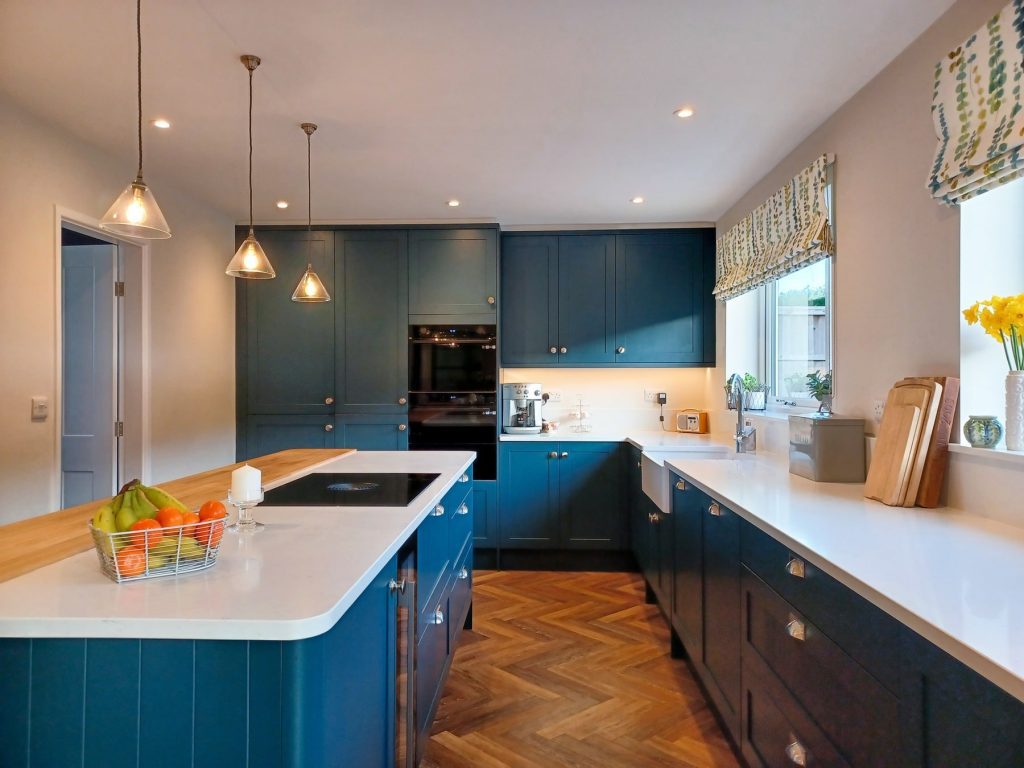
Color plays a role in shaping the appearance and atmosphere of a kitchen. During kitchen remodeling, contractors can help homeowners select the right colors for floors, countertops, cabinets, and walls; these influence the cohesiveness within the space. Here are a few impacts of color on kitchen design:
Support a Welcoming Effect
Red may introduce visual warmth into a kitchen, and it helps give the space a more active and inviting character. This color provides depth to cabinetry, walls, or accent features while helping the room look more defined. Pair deeper shades of red with metallic finishes or dark wood tones. A kitchen can also use variation within the same palette, such as different red hues on upper and lower cabinets, to create contrast and a more layered appearance.
Create an Open Appearance
Yellow helps make a kitchen brighter in spaces with limited natural light. It can reflect both daylight and artificial light well, so the room appears more open and active. Use yellow paint on walls, cabinets, or smaller surface features to introduce warmth. While stronger shades create a lively effect, softer tones may support brightness in a more balanced way. The overall result depends on where the color is placed and how it interacts with surrounding finishes.
White gives a kitchen a brighter and more open appearance, which is why it is often used in both small and large layouts. Since it reflects light well, the color allows dim areas to become clearer and helps compact kitchens appear less confined. It also works as a neutral base, so white cabinets, walls, and floors draw attention to surrounding textures and colors. While the effect is simple, the shade selection still matters, since warmer and cooler whites can change how the overall design appears.
Bring a Natural Look
Green gives a kitchen a balanced appearance, and it introduces a natural quality into the design. Since this color may include both warm and cool shades, it works across a wide range of kitchen styles and material combinations. Darker green cabinets can create a stronger focal point, while softer greens tend to support a simpler visual effect. In kitchen remodeling plans, green also pairs well with wood tones, brown finishes, and terracotta surfaces, which helps the space appear more coordinated.
Blue provides kitchens with a relaxed visual tone, which is why it may appear in both classic and modern designs. Lighter blues help soften the room, and deeper shades add contrast and create a more defined look. Darker blue finishes also reduce the appearance of scuffs, stains, and fingerprints on busy surfaces. When blue walls are paired with white cabinetry or trim, it introduces color while helping the kitchen maintain a clean and modern appearance.
Hire Kitchen Remodeling Experts
Using the correct colors in kitchen remodeling may improve its aesthetics and functionality. Working with home remodelers helps homeowners choose the right color combination for the kitchen. Whether you want to add a modern touch or some warmth, the right color will allow you to achieve it. Contact expert remodelers today to customize and remodel your kitchen using different colors.